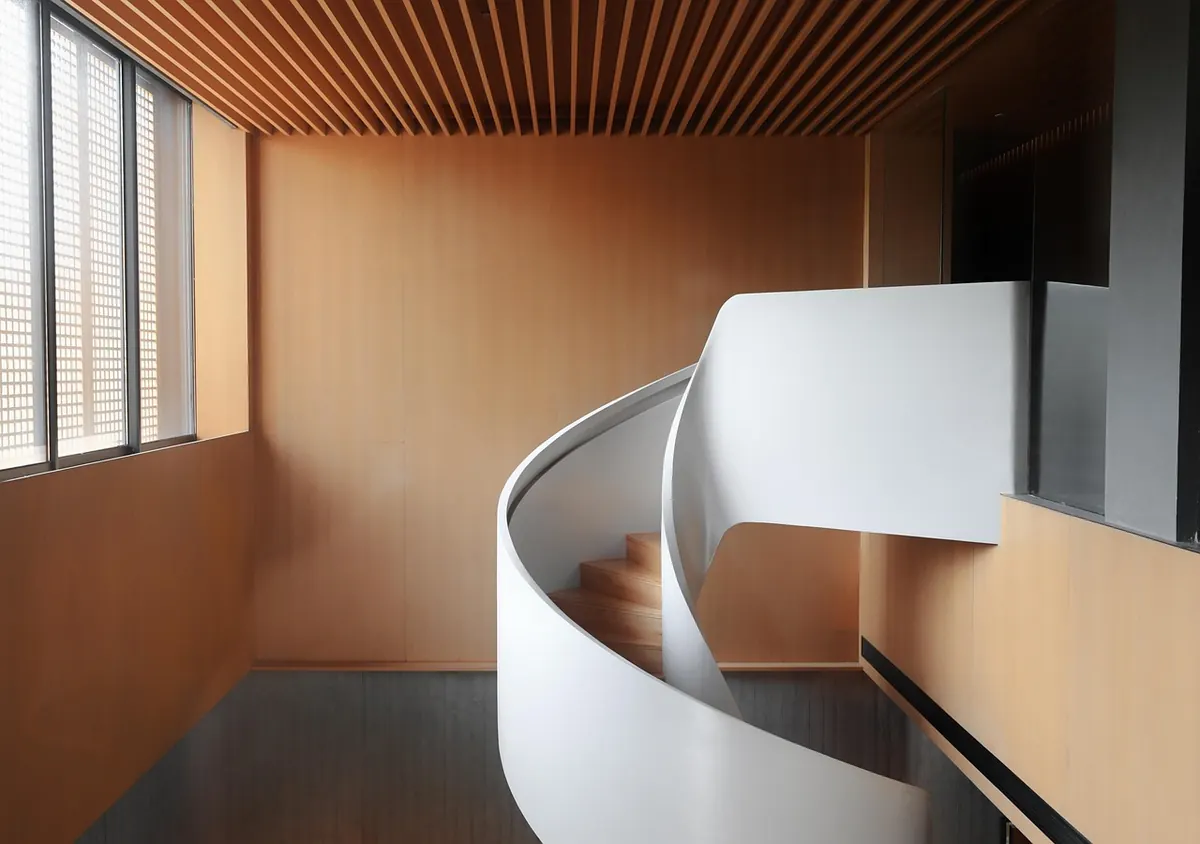
North-facing rooms have a reputation problem, and much of it is earned. Light arriving through a north window is cool, diffuse and steady — lovely for reading, unforgiving on a beige sofa you fell for under shop lighting. In the UK, where a north-facing room might catch direct sun only briefly in midsummer, that cool cast is the light you are decorating with for most of the year. Choose the palette well and the room feels calm and soft rather than dim. Choose it badly and no number of cushions will rescue it.
Why north light changes everything
Direction matters more than most decorating advice admits. A south-facing room receives direct sun that warms everything it touches. A north-facing one is lit almost entirely by bounced light from a grey-white sky, and that light is cooler in colour, lower in contrast and softer in shadow. Whites drift towards grey-blue. Warm colours lose saturation. Deep colours can turn muddy rather than rich.
Winter makes it harder still: shorter days, low cloud, and a neighbouring building or mature hedge cutting off what little light there is. The result is a room that reads two or three shades darker and noticeably cooler than the same paint would in a south room or under the strip lights of a paint shop. Plan for that from the start and you will spend far less time fighting it later.
Begin with how the room is actually used
Not every north-facing room needs the same treatment. A north-east bedroom catches early sun in summer and feels bright by breakfast; a north-west sitting room gets late afternoon light and can be genuinely lovely in the evening. Stand in the room at the times you really use it — weekday mornings, winter evenings — and note where light falls and which corners stay gloomy.
Then think about function. A home office benefits from clarity and contrast, so you can afford more white and a stronger accent. A living room used for films and conversation needs warmth, softness and low glare. A north-facing kitchen often needs the most help of all, particularly if the units and worktops are already cool grey or white.
Lean on warm neutrals, not cool ones
The most useful rule in this whole guide: choose neutrals with a yellow, red, pink or green base rather than a blue or grey one. In a north room, a warm off-white reads as a soft white; a cool one reads as grey, no matter how many times you repaint it.
- Warm whites and off-whites — chalk, shell, bone, oatmeal, warm plaster
- Sand and stone tones — sand, biscuit, warm greige, limestone
- Earthy mid-tones — mushroom, clay, camel, tobacco, terracotta
- Soft greens — olive, sage and moss hold their own in cool light
- Warm darks — chocolate, aubergine and warm charcoal for alcoves and chimney breasts
Approach these with caution:
- Brilliant white on every surface, which turns flat and faintly blue
- Cool greys with blue or lilac undertones
- Icy blues, mint and pale lilac
- Black-brown and grey-washed wood tones
Scheme one: soft and light
Walls in warm off-white or oatmeal, ceiling and woodwork in the same tone in eggshell rather than matt, flooring in natural oak or jute, upholstery in oat linen with a camel throw, aged brass lamp bases, and one rust or clay accent — a cushion, a lamp, a ceramic vase.
Scheme two: deeper and cosier
Walls in olive or mushroom, ceiling in a warm white, chocolate or walnut furniture, wool and bouclé upholstery, terracotta and antiqued bronze accents, and a deep aubergine alcove if you have a chimney breast to work with.
Read undertones before you buy
Undertones are the small amount of colour inside a neutral, and they decide whether a paint sings or sulks in a north room. Squeeze a dollop onto white paper and compare it with a true white. Does it lean yellow, pink, green or grey? Then compare it with the fixed things you cannot change: flooring, tiles, worktops, the sofa you already own. A warm-neutral wall beside a cool grey carpet will make both look wrong.
Test in the room, properly:
- Paint A2 or A3 boards with two coats and leave a white border as a reference.
- Stand them vertically — on a shelf or leaning against the wall — never flat on a table.
- Look at them at three times: morning, mid-afternoon, and after dark with the lamps on.
- Move them around: beside the window, in the darkest corner, on the wall opposite the window.
- Live with the winner for a week before ordering the full tin.
Let fabric, texture and finish do half the work
Colour is only part of warmth. A cool-toned room full of wool, bouclé, brushed cotton and velvet feels far more welcoming than a warm-toned room full of gloss, glass and chrome.
- Upholstery: wool, bouclé, brushed cotton, linen blends, corduroy, velvet. Velvet in particular catches whatever light there is and glows.
- Floors: natural oak, walnut, cork, or a wool rug over hard flooring. Jute and sisal add texture but are cooler underfoot.
- Finishes: matt and eggshell over high gloss, which bounces light back as a cold sheen.
- Metals: aged brass, antiqued bronze and copper warm a room; chrome and polished nickel cool it.
- Ceiling: a warm white rather than a brilliant one. It is the largest reflective surface you have.
Layer warm artificial light
Because north rooms rely on lamps far earlier in the day, lighting is part of the palette, not an afterthought. Choose warm white bulbs, around 2700K, rather than cool or daylight bulbs, which will undo every careful paint choice you have made. Put them on dimmers where you can.
Aim for pools of light rather than one bright source: a floor lamp, a table lamp either side of the sofa, a wall light or picture light. Linen and warm-coloured shades cast a soft, generous glow. Downlights alone give flat, shadowy light and tend to emphasise cool tones. Add candles or a small uplighter in a dark corner, and the room will feel warmer at eight in the evening than it does at noon.
A simple way to decide
If you want a decision this week rather than a year of repainting, work in this order:
- Note the room's real light at the times you use it.
- Choose a warm off-white for the walls: chalk, oatmeal, bone or warm plaster.
- Repeat it on the ceiling and woodwork in eggshell, a shade warmer than the brightest white you own.
- Add one warm mid-tone — mushroom, clay, olive — on a focal wall, an alcove or a large piece of furniture.
- Bring in texture: a wool rug, linen curtains, a bouclé chair, a sheepskin throw.
- Swap chrome and daylight bulbs for aged brass and warm white lamps.
Then live with it for a full winter before judging it. North-facing rooms reward patience more than most, and a palette that feels merely acceptable in June will feel quietly generous in February.
Photo: zhangliams / Pixabay